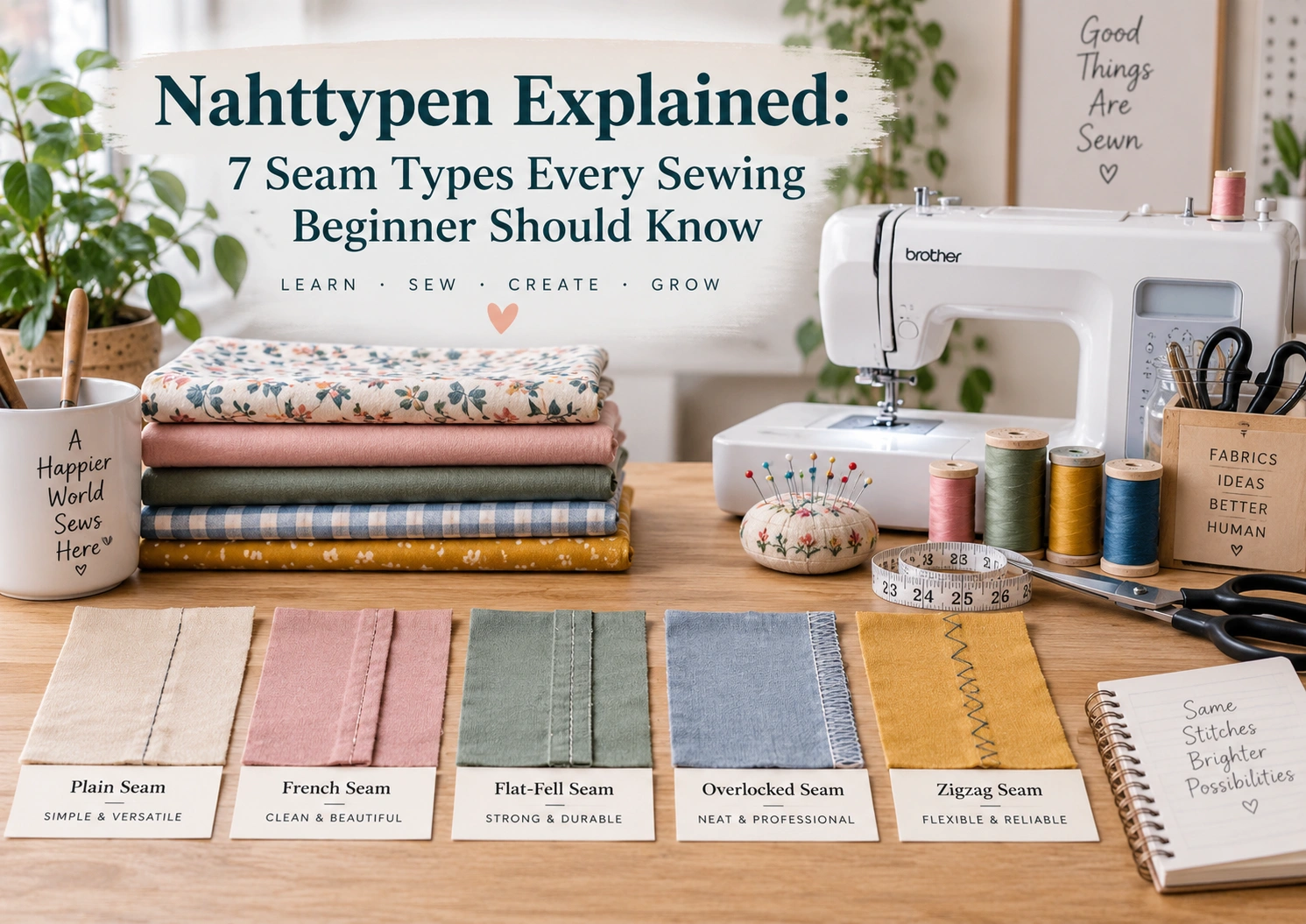
Nahttypen Explained: 7 Seam Types Every Sewing Beginner Should Know
Nahttypen means seam types in German. In sewing, it refers to the different ways fabric pieces are joined together. A seam may look like a small detail, but it can change the strength, comfort, appearance, and durability of a finished project.
Every garment, bag, curtain, cushion cover, or handmade textile item depends on seams. A plain seam may be enough for a simple cotton project, but a delicate blouse may need a French seam. A pair of jeans may need a flat-fell seam, while stretch fabric often needs a zigzag or stretch seam.
Learning different Nahttypen helps beginners sew with more confidence. Instead of using the same seam for every project, you can choose the right seam for the fabric, purpose, and finish you want.
Table of Contents
What Does Nahttypen Mean?
Nahttypen is a German word that means seam types. “Naht” means seam, and “Typen” means types. In English sewing language, Nahttypen simply refers to the different types of seams used to join fabric.
A seam is more than a line of stitching. It connects fabric pieces, supports the shape of the garment, prevents raw edges from fraying, and sometimes adds decoration.
For example, the seam used on a light chiffon blouse is not always suitable for denim jeans. The seam used on a stretchy T-shirt may not work well on a structured jacket. This is why understanding Nahttypen is useful for both beginners and experienced sewists.
Also Read : Verklempt Meaning, Pronunciation, Synonyms, and Examples
Why Seam Types Matter in Sewing
Seam choice matters because different fabrics behave differently. Some fabrics fray easily. Some stretch. Some are thick. Some are delicate and transparent. Some need strength, while others need a clean and invisible finish.
The right seam can help with:
- Stronger garment construction
- Cleaner fabric edges
- Better comfort
- Less fraying
- More professional finishing
- Better stretch and movement
- Longer-lasting handmade projects
- Improved appearance inside and outside the garment
A poor seam choice can cause puckering, broken stitches, bulky edges, weak construction, or uncomfortable clothing. That is why Nahttypen are an important part of sewing knowledge.
Also Read : Transjoaimo: Road Freight, Cargo Transport and Logistics Services Guide
The 7 Main Nahttypen Every Beginner Should Know
There are many seam types, but beginners do not need to learn all of them at once. The best starting point is to understand seven common Nahttypen that are used in everyday sewing and garment construction.
These include:
- Plain seam
- French seam
- Flat-fell seam
- Overlocked or serged seam
- Zigzag or stretch seam
- Bound seam
- Welt seam
Each seam has a different purpose. Some are simple and quick. Some are strong. Some are decorative. Some are best for delicate fabric, while others are better for stretch or heavy fabric.
Also Read : It Means a Lot to Me Meaning Simple Explanation With Examples
Plain Seam: The Most Common Sewing Seam
The plain seam is the most basic and common seam in sewing. It is created by placing two fabric pieces together, usually with right sides facing each other, and stitching along the seam line.
This seam is used in many beginner projects because it is simple, fast, and easy to understand.
A plain seam is often used for:
- Cotton clothing
- Simple skirts
- Pillow covers
- Tote bags
- Basic shirts
- Craft projects
- Home sewing items
The main advantage of a plain seam is simplicity. It works well for stable woven fabrics and basic construction. However, the raw edges usually need finishing. If the fabric frays, the seam allowance may need zigzag stitching, overlocking, pinking, or binding.
A plain seam is a good first seam for beginners because it teaches basic stitching control, seam allowance, pressing, and fabric alignment.
Also Read : If Time Permits Meaning Simple Explanation With Examples
French Seam: Best for Delicate and Sheer Fabrics
A French seam is a neat seam that hides raw fabric edges inside the seam itself. It is often used for delicate, lightweight, or sheer fabrics where the inside of the garment should look clean.
Unlike a plain seam, a French seam is sewn in two steps. First, the fabric is sewn with the wrong sides together. Then the seam is trimmed, folded, pressed, and sewn again with the right sides together. This traps the raw edge inside.
A French seam is useful for:
- Chiffon
- Organza
- Voile
- Lightweight cotton
- Silk-like fabrics
- Delicate blouses
- Sheer dresses
- Fine handmade garments
The biggest benefit of a French seam is its clean finish. It looks beautiful from the inside and prevents delicate fabrics from fraying.
However, it is not the best choice for thick fabrics because the folded seam can become bulky. It also takes more time than a plain seam, so beginners should practice it on fabric scraps before using it on a final garment.
Flat-Fell Seam: Strong Seam for Jeans and Workwear
A flat-fell seam is a strong and durable seam often seen on jeans, workwear, shirts, and casual clothing. It encloses the raw edges and creates a flat, reinforced finish.
This seam is popular because it is both strong and neat. It can handle stress and repeated washing, which makes it ideal for garments that need durability.
A flat-fell seam is commonly used for:
- Jeans
- Denim jackets
- Work shirts
- Casual shirts
- Children’s clothing
- Aprons
- Sportswear
- Durable bags
The seam is created by sewing the fabric pieces together, trimming one seam allowance, folding the other over it, and stitching it down. The result is a seam that lies flat and hides raw edges.
The flat-fell seam is stronger than many basic seams because it includes extra stitching. It is especially useful in areas that experience pulling or movement, such as side seams, sleeves, and trouser seams.
Overlocked or Serged Seam: Clean Finish for Everyday Sewing
An overlocked seam, also called a serged seam, is made with a serger or overlock machine. It trims the fabric edge and wraps thread around the raw edge at the same time.
This creates a clean and professional-looking finish.
Overlocked seams are often used in:
- Everyday clothing
- Woven fabrics
- Knit garments
- T-shirts
- Casual dresses
- Pants
- Skirts
- Commercial garments
The main benefit of an overlocked seam is speed. It finishes the edge neatly and helps prevent fraying. This is why many ready-made garments use overlocked seams inside.
A serger is helpful, but beginners do not always need one. A regular sewing machine with a zigzag stitch can also finish raw edges, although the result may not look exactly the same as a serged seam.
Zigzag or Stretch Seam: Best for Knit and Stretch Fabrics
A zigzag or stretch seam is useful when sewing fabrics that need movement. Straight stitches can break when fabric stretches, but a zigzag stitch allows the seam to move with the fabric.
This seam is commonly used for:
- T-shirts
- Leggings
- Jersey fabric
- Rib knit
- Sportswear
- Stretch dresses
- Children’s clothing
- Elastic areas
A zigzag seam works because the stitch has width. When the fabric stretches, the stitch can open slightly instead of snapping.
Many sewing machines also have special stretch stitches. These can be useful for knit fabric, but a simple zigzag stitch is often enough for beginner projects.
When sewing stretch fabric, needle choice also matters. A ballpoint or stretch needle can help prevent skipped stitches and fabric damage.
Bound Seam: A Neat Finish for Unlined Garments
A bound seam is a seam where the raw edges are covered with binding. This creates a clean and decorative finish, especially inside unlined garments.
Binding can be made from bias tape, fabric strips, or ready-made seam binding. It wraps around the raw edge and is stitched in place.
Bound seams are useful for:
- Unlined jackets
- Coats
- Handmade bags
- Quilted projects
- Home décor items
- High-quality garments
- Visible inside seams
The biggest advantage of a bound seam is appearance. It makes the inside of a project look neat and intentional. It is especially useful when the garment does not have lining to hide the seam allowances.
Bound seams can take more time, but they give handmade projects a polished finish.
Welt Seam: A Decorative and Reinforced Seam
A welt seam is a seam that creates a raised or topstitched effect. It can add structure, decoration, and reinforcement.
Welt seams are often used where a seam should be visible and attractive. They can also help strengthen an area of a garment.
A welt seam may be used for:
- Jackets
- Coats
- Bags
- Decorative clothing seams
- Structured garments
- Sportswear details
- Upholstery-style projects
The welt seam is not always the first seam beginners learn, but it is useful once you want your projects to look more professional. It adds a design element while also helping the seam stay secure.
Nahttypen Comparison Table
| Nahttyp / Seam Type | Best For | Main Benefit |
|---|---|---|
| Plain Seam | Basic clothing, cotton, simple projects | Easy and quick |
| French Seam | Sheer fabric, delicate blouses, fine garments | Hides raw edges |
| Flat-Fell Seam | Jeans, shirts, workwear, durable clothing | Very strong |
| Overlocked Seam | Everyday garments and woven fabrics | Prevents fraying |
| Zigzag / Stretch Seam | Knit and stretch fabrics | Allows movement |
| Bound Seam | Unlined jackets, coats, handmade garments | Clean inner finish |
| Welt Seam | Decorative seams and reinforced areas | Adds structure and style |
This table gives a quick overview, but the best seam still depends on the fabric, garment style, and amount of stress the seam will handle.
How to Choose the Right Seam for Your Fabric
Choosing the right Nahttypen becomes easier when you first look at the fabric. The fabric tells you what kind of seam it needs.
Ask yourself:
- Is the fabric thick or thin?
- Does it stretch?
- Does it fray easily?
- Will the seam be visible?
- Does the garment need strength?
- Will the item be washed often?
- Should the inside look neat?
- Is the seam decorative or hidden?
Once you answer these questions, seam selection becomes more practical.
Best Seams for Woven Fabrics
Woven fabrics are common in shirts, dresses, skirts, trousers, tote bags, and home sewing projects. Cotton, linen, denim, poplin, canvas, and many suiting fabrics are woven.
For stable woven fabric, a plain seam is often enough. However, the raw edges should be finished if the fabric frays.
Good seam choices for woven fabric include:
- Plain seam for basic construction
- French seam for lightweight woven fabric
- Flat-fell seam for strength
- Bound seam for neat inner finishes
- Overlocked seam for fast edge finishing
Woven fabrics are beginner-friendly because they do not stretch as much as knits. This makes seam control easier.
Best Seams for Knit and Stretch Fabrics
Knit and stretch fabrics need seams that can move. A regular straight stitch may break when the fabric stretches, so a zigzag seam or stretch stitch is usually better.
Good seam choices for stretch fabric include:
- Zigzag seam
- Stretch stitch
- Overlocked seam
- Narrow zigzag seam
- Twin-needle finish for hems
When sewing stretch fabric, avoid pulling the fabric too hard while stitching. Let the machine feed the fabric naturally. Pulling can stretch the seam and create waves.
A walking foot can also help if the fabric layers shift.
Best Seams for Delicate or Sheer Fabric
Delicate fabrics need a clean and lightweight seam. Heavy seams can look bulky or show through the fabric.
Good seam choices for delicate fabric include:
- French seam
- Narrow plain seam with clean finishing
- Bound seam for special projects
- Rolled or narrow finishes for edges
French seams are especially popular for sheer fabrics because they hide raw edges and create a neat inside finish. However, they require careful trimming and pressing.
German-to-English Nahttypen Glossary
| German Term | English Meaning |
|---|---|
| Naht | Seam |
| Nahttypen | Seam types |
| Steppnaht | Plain seam or stitched seam |
| Kappnaht | Flat-fell seam |
| Französische Naht | French seam |
| Overlocknaht | Overlocked seam |
| Zickzacknaht | Zigzag seam |
| Dehnnaht | Stretch seam |
| Saum | Hem |
| Nahtzugabe | Seam allowance |
| Stoff | Fabric |
| Faden | Thread |
This glossary is helpful if you are reading German sewing patterns, sewing blogs, or European garment construction guides.
Common Mistakes Beginners Make With Seam Types
Many sewing problems happen because the seam does not match the fabric or purpose of the project.
Common mistakes include:
- Using a straight stitch on stretch fabric
- Not finishing raw edges on fraying fabric
- Choosing a bulky seam for delicate fabric
- Not pressing seams during sewing
- Sewing with the wrong needle
- Ignoring seam allowance
- Pulling fabric while stitching
- Skipping test seams
- Using weak thread for heavy projects
- Choosing speed over durability
The easiest way to avoid these mistakes is to test the seam on a fabric scrap before sewing the final project. This simple habit can prevent many problems.
Tools That Help You Sew Better Seams
Good tools make Nahttypen easier to learn. You do not need every sewing tool at once, but a few basics can improve your results.
Useful sewing tools include:
- Sewing machine
- Sharp fabric scissors
- Seam ripper
- Measuring tape
- Pins or clips
- Iron and ironing board
- Tailor’s chalk or fabric marker
- Matching thread
- Correct sewing machine needles
- Presser feet
- Serger or overlock machine
- Bias tape for bound seams
An iron is especially important. Pressing seams while sewing helps them lie flat and look professional. Many beginners skip pressing, but it can make a big difference in the final result.
How Pressing Improves Seam Quality
Pressing is not the same as ironing. Ironing usually moves the iron back and forth, while pressing means lifting and placing the iron on the seam to shape it.
Pressing helps:
- Set stitches
- Flatten seam allowances
- Reduce bulk
- Improve garment shape
- Create cleaner edges
- Make topstitching easier
- Give projects a professional finish
For seams like French seams, flat-fell seams, and bound seams, pressing is essential. Without pressing, the seam may look uneven or bulky.
How Seam Allowance Affects Nahttypen
Seam allowance is the distance between the stitching line and the raw edge of the fabric. It affects how strong and neat the seam becomes.
A wider seam allowance gives more room for finishing, trimming, and adjusting. A narrow seam allowance reduces bulk but leaves less room for correction.
Different Nahttypen may need different seam allowances. For example, a French seam usually needs trimming between steps, while a bound seam needs enough fabric edge to cover neatly.
Always check your sewing pattern before cutting and sewing. If the pattern uses a specific seam allowance, follow it carefully.
Best Nahttypen for Beginner Projects
Beginners should start with simple seams before moving to more complex finishes.
Good beginner seams include:
- Plain seam
- Zigzag seam
- Overlocked-style edge finish
- Simple French seam
- Basic bound seam
Beginner-friendly projects include:
- Tote bags
- Pillow covers
- Aprons
- Simple skirts
- Pajama pants
- Table runners
- Fabric pouches
These projects give you practice with straight stitching, seam allowance, pressing, and finishing raw edges.
Nahttypen for Clothing Construction
Clothing needs seams that can handle movement, washing, and body shape. The seam should be strong enough for the garment but comfortable enough to wear.
For clothing, common seam choices include:
- Plain seam for basic garments
- French seam for delicate blouses
- Flat-fell seam for jeans and shirts
- Overlocked seam for everyday clothing
- Zigzag seam for stretch garments
- Bound seam for unlined jackets
The right seam can make handmade clothing look cleaner and last longer.
Nahttypen for Home Sewing Projects
Home sewing projects often use stronger fabrics such as cotton, canvas, linen, denim, or upholstery fabric. These projects may need seams that can handle weight and repeated use.
For home sewing, good seam choices include:
- Plain seam for basic construction
- Flat-fell seam for strength
- Bound seam for visible edges
- Overlocked seam to prevent fraying
- Welt seam for decorative structure
Items like cushion covers, curtains, table runners, and tote bags benefit from neat seam finishing because they are used often and may be washed regularly.
Frequently Asked Questions About Nahttypen
What does Nahttypen mean in English?
Nahttypen means seam types in English. It refers to the different ways fabric pieces are joined together in sewing and garment construction.
What are the main Nahttypen in sewing?
The main Nahttypen include plain seam, French seam, flat-fell seam, overlocked seam, zigzag or stretch seam, bound seam, and welt seam.
Which seam type is best for beginners?
The plain seam is the best seam type for beginners because it is simple, common, and easy to practice. Beginners can later learn French seams, zigzag seams, and bound seams.
Which seam is best for stretch fabric?
A zigzag seam, stretch stitch, or overlocked seam is best for stretch fabric. These seams allow the fabric to move without breaking the stitches.
What is the strongest seam type for clothing?
A flat-fell seam is one of the strongest seam types for clothing. It is often used in jeans, workwear, shirts, and durable garments.
What is the difference between a French seam and a flat-fell seam?
A French seam hides raw edges inside the seam and is best for delicate or sheer fabric. A flat-fell seam is stronger and flatter, making it better for jeans, shirts, and workwear.
Do I need a serger to sew clean seams?
No, you do not need a serger to sew clean seams. A serger is helpful, but a regular sewing machine can finish seams with zigzag stitching, French seams, bound seams, or careful trimming and pressing.
Final Thoughts on Nahttypen
Nahttypen are an important part of sewing because every seam affects the strength, comfort, appearance, and durability of a project. Learning different seam types helps you move beyond basic stitching and choose the right construction method for each fabric.
A plain seam is perfect for simple projects. A French seam gives delicate fabrics a clean finish. A flat-fell seam adds strength to jeans and workwear. An overlocked seam helps prevent fraying. A zigzag or stretch seam works well for knit fabrics. A bound seam creates a beautiful inside finish, while a welt seam adds structure and style.
There is no single best seam for every project. The best choice depends on the fabric, purpose, design, and amount of wear the item will receive.
Once you understand Nahttypen, your sewing becomes more intentional. You no longer join fabric pieces randomly. You choose seams that support the project, protect the fabric, and improve the finished result.