
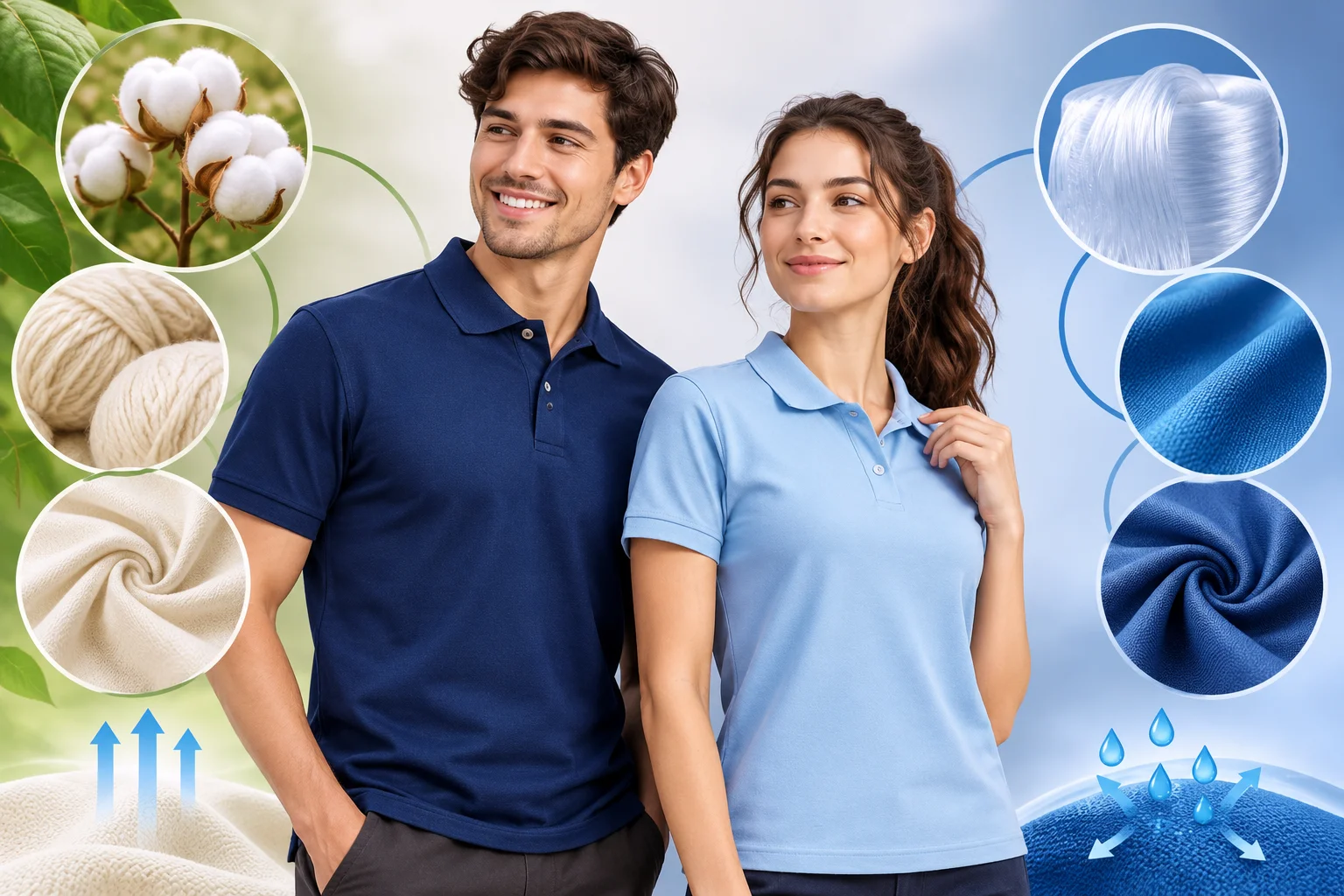
Two polo shirts can share the same collar, the same placket and the same logo, yet feel completely different the moment you put them on. One feels soft, matte and familiar. The other feels smooth, cool and slightly silky. One wrinkles after a long drive. The other looks almost the same at the end of the day as it did in the morning.
The difference comes down to fiber. Polo shirts today are made from natural fibers such as cotton, synthetic fibers such as polyester, and many blends in between. Each fiber brings its own strengths and limitations.
For individuals, fiber choice affects comfort and how a polo looks over time. For businesses, schools, and teams ordering polos in quantity, it affects durability, care requirements, and how well a uniform holds its color. This article explores how natural and synthetic fibers shape the polo shirt and how to choose between them.
Table of Contents
Understanding Polo Fibers
Cotton
Cotton is a natural plant fiber. It has been used in polo shirts since their early days and remains popular for its softness, breathability, and classic appearance.
Polyester
Polyester is a synthetic fiber. It is valued for durability, color retention, wrinkle resistance, and quick drying. Many modern polos, especially those designed for sport or uniforms, use polyester.
Blends
Cotton-polyester blends aim to combine the softness of cotton with the durability of polyester. The ratio varies, and each ratio creates a slightly different feel and performance.
Smooth-Finish Synthetics
Some polos use finely knitted synthetic or blended fabrics designed to feel exceptionally smooth to the touch. These fabrics are often marketed with names that suggest luxury, even though they are not made from silk. Their appeal lies in a soft, sleek hand feel combined with easy care.
How Cotton Polos Feel and Perform
Comfort and Breathability
Cotton feels soft and natural against the skin. It breathes well in moderate conditions and is often preferred by people who find synthetic fabrics less comfortable.
Appearance
Cotton polos, especially in piqué knit, have a classic, slightly textured look. They suit corporate, retail, and casual settings where a traditional appearance is valued.
Limitations
Cotton can shrink if washed or dried at high temperatures. It wrinkles more easily and may fade over time. It also absorbs moisture, which can make it less comfortable during heavy activity.
Where Cotton Works Best
Cotton polos suit office environments, retail floors, clubs, and casual wear where comfort and a classic look are priorities. Corporate teams, retailers,s and member clubs that value this traditional feel often choose wholesale cotton polos, accepting slightly more careful laundering in exchange for the soft, natural texture many wearers prefer.
How Synthetic Polos Feel and Perform
Durability and Color Retention
Polyester holds color well and resists shrinking and stretching. This makes it popular for uniforms that are washed frequently.
Wrinkle Resistance
Synthetic polos tend to look neat throughout the day, even after sitting, driving, or traveling.
Moisture Management
Many synthetic polos are designed to wick moisture and dry quickly, making them suitable for active roles and warm environments.
Limitations
Some people find synthetic fabrics less breathable or less comfortable than cotton. Synthetics can also hold odors more than cotton if not washed properly.
The Appeal of Smooth-Finish Polos
A Refined Hand Feel
Smooth-finish polos offer a soft, almost silky touch that many wearers appreciate. They often have a subtle sheen and drape that looks polished.
Easy Care
These fabrics typically resist wrinkles, shrinking, and fading, making them practical for uniforms that need to look sharp with minimal effort.
Where They Work Best
Smooth-finish polos are popular with franchises, hospitality teams, schools,s and organizations that want a professional look with low maintenance. Teams choosing silk touch polos usually value that combination of a smooth, premium feel and straightforward care, especially when shirts are laundered frequently at home by staff.
Understanding the Name
It is worth noting that “silk touch” describes how the fabric feels rather than what it is made from. These polos are typically made from synthetic or blended fibers engineered to feel smooth, not from actual silk.
Comparing Fibers From Different Perspectives
The Wearer
Wearers often choose based on comfort. Some prefer the softness and breathability of cotton. Others prefer the smooth feel and easy care of synthetics. Personal preference, climate, and activity level all play a role.
The Employer
Employers usually consider durability, cost over time, color consistency, and care requirements. Synthetic and blended polos often perform well in uniform programs because they hold their appearance through frequent washing.
The Decorator
Decorators consider how fabrics take embroidery and printing. Cotton accepts embroidery and many printing methods well. Polyester can be heat-sensitive, requiring suitable decoration methods. Smooth-finish fabrics often embroider well with proper backing.
The Customer
Customers notice appearance. A neat, color-consistent polo suggests professionalism, while faded or wrinkled shirts can create a less favorable impression.
Important Elements in Fiber Choice
Climate
Cotton suits moderate conditions. Synthetics and moisture-wicking blends suit hot or humid environments and active roles.
Activity Level
Low-activity roles can use cotton comfortably. High-activity roles often benefit from synthetic or blended fabrics.
Washing Frequency
Uniforms washed several times a week benefit from fibers that resist shrinking and fading.
Desired Appearance
Cotton offers a classic, matte look. Smooth-finish synthetics offer a sleek, polished look. Blends fall somewhere in between.
Sensitivity and Comfort
Some wearers have preferences or sensitivities that make one fiber more comfortable than another. Offering options can help.
Applying This Knowledge
Define the Purpose
Start by asking what the polo needs to do. Is it mainly for appearance, comfort, durability, or performance?
Consider the Environment
Think about temperature, humidity, and activity levels where the polo will be worn.
Test Samples
Order samples in different fibers and ask wearers for feedback after several days of wear and multiple washes.
Plan for Care
Provide clear care instructions. Cotton may need cooler washing to avoid shrinkage, while synthetics may need care to prevent odor buildup.
Think Long Term
Consider how the polo will look after months of use, not just when new.
Understanding Blend Ratios
Blended polos are among the most common choices for uniforms, but the ratio of fibers changes how they behave.
Cotton-Heavy Blends
Blends with a higher share of cotton feel softer and more natural. They breathe well in moderate conditions and have a classic appearance, while the added polyester improves durability and reduces shrinkage compared with pure cotton.
Balanced Blends
An even mix of cotton and polyester offers a middle path. These polos often hold color well, resist wrinkles reasonably, and still feel comfortable for everyday wear. They are a popular default for uniform programs that need a dependable all-round shirt.
Polyester-Heavy Blends
Blends with more polyester lean toward performance. They dry faster, resist fading and maintain their shape well, but may feel less like traditional cotton.
Why the Ratio Matters
The ratio affects comfort, appearance, care,e and how logos look after repeated washing. Buyers comparing polos should check fiber composition on labels or product descriptions rather than relying on general terms like “blend.” Two shirts labeled as blends can feel and perform quite differently.
Sustainability Considerations
Some buyers also consider environmental factors. Cotton is a natural fiber, while polyester is synthetic, and blends can be harder to recycle. Some polos use recycled polyester or organically grown cotton. Buyers interested in these options should look for clear, verifiable information from manufacturers.
Common Mistakes When Choosing Polo Fibers
Choosing Based Only on First Feel
A fabric that feels pleasant in a store may not hold up to frequent washing or demanding conditions.
Ignoring Shrinkage
Cotton polos washed hot or dried on high heat may shrink, leading to poor fit.
Overlooking Odor Care
Synthetic polos can retain odors if left damp or washed infrequently.
Mixing Fibers in One Uniform
Using different fibers across the same team can lead to visible differences in sheen and color.
Misunderstanding Fabric Names
Names that suggest luxury fibers may describe feel rather than content. Checking fiber composition avoids confusion.
Why Fiber Choice Matters
Fiber choice affects how a polo feels, how it looks, how long it lasts, and how easy it is to care for. For individuals, it shapes daily comfort. For organizations, it influences uniform costs, staff satisfaction, and how professional teams appear to customers.
Understanding fibers helps buyers make informed decisions rather than relying solely on price or appearance in a catalog.
Also Read : Signs Your Deck Needs Repair and How to Address Them
Conclusion
Natural and synthetic fibers each bring distinct qualities to the polo shirt. Cotton offers softness, breathability,y and a classic look but requires careful laundering. Polyester and synthetic blends provide durability, color retention, wrinkle resistance, and moisture management. Smooth-finish synthetics add a refined feel with easy care.
The right choice depends on climate, activity, washing frequency, appearance goals and wearer comfort. By testing samples, planning for care and thinking about long-term performance, individuals and organizations can choose polos that feel good, look sharp and last.
FAQs:
Q1:Are cotton polos better than polyester polos?
Neither is universally better. Cotton feels soft and breathable, while polyester offers durability, color retention, and quick drying. The best choice depends on use.
Q2:Do cotton polos shrink?
Cotton polos can shrink when washed in hot water or dried on high heat. Cooler washing and low-heat drying help prevent this.
Q3:Are “silk touch” polos made of silk?
No. The name describes the smooth feel of the fabric. These polos are typically made from synthetic or blended fibers.
Q4:Which polo fabric is best for uniforms?
Blends and synthetic fabrics are often preferred for uniforms because they resist shrinking, fading and wrinkling, though cotton suits some settings.
[…] Also read: Natural and Synthetic Fibers in Polo Shirts: How Fabric Shapes Comfort and Appearance […]