JS Meaning in Text Simple Explanation With Examples
JS often means “just saying” in a text or social media comment. It adds an opinion or observation, as in “The earlier train is cheaper, js.” Some people also shorten “just” to “js,” while a conversation about code usually uses JS for JavaScript. The words around it tell you which meaning fits.
People use JS when they want to add a comment, opinion, or small remark without sounding too serious. It often appears at the end of a sentence, especially when someone wants to make a point, give an opinion, or soften what they just said.
Also check STFU Meaning in Text Simple Explanation With Examples
In most cases, JS helps make a message sound casual and conversational. It is common in texting because it is quick to type and easy to understand once you know the meaning.
Table of Contents
What Does JS Mean in Text
JS usually means “just saying.” In plain English, it is used when someone wants to:
- share an opinion
- make a casual point
- add a remark without sounding too forceful
- say something directly but lightly
For example:
- That movie was kind of boring, js.
- You could have replied earlier, js.
- I think the blue one looks better, js.
In each of these examples, JS works like the phrase “just saying.” That is why people searching for what does js mean, what does js mean in text, or what does js mean in texting usually find the same answer.
How JS Is Used in Text Conversations
JS is used in text conversations when someone wants to add a thought or opinion in a casual way. It often appears at the end of a sentence and helps the message sound less direct, even when the speaker is making a strong point.
People usually use JS when they want to:
- give an opinion
- point something out
- make a comment without sounding too serious
- soften criticism or advice
Examples:
- You should probably leave earlier, js.
- That place is overpriced, js.
- I think she already knew, js.
- You could have told me sooner, js.
In each example, JS works like a short version of “just saying.” It tells the reader that the speaker is adding a personal remark or opinion.
Examples of JS in Text Messages
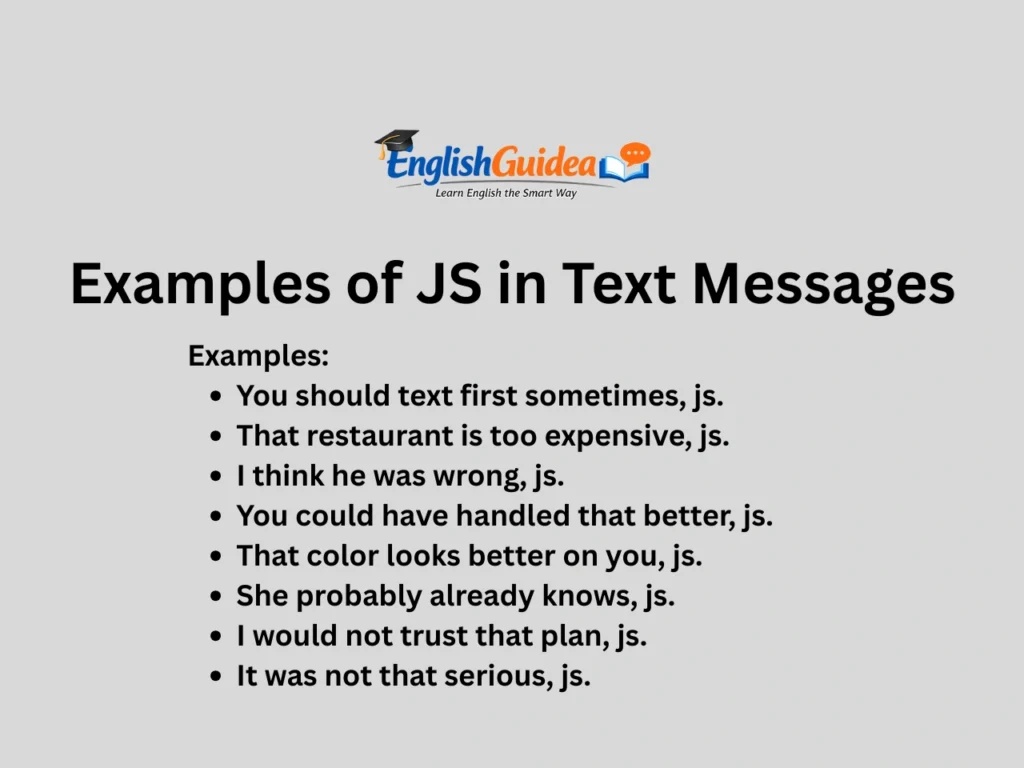
Looking at real examples makes the meaning of JS much easier to understand. In most cases, it is used as a short way to say “just saying” after an opinion, comment, or casual remark.
Here are some common examples:
- You should text first sometimes, js.
- That restaurant is too expensive, js.
- I think he was wrong, js.
- You could have handled that better, js.
- That color looks better on you, js.
- She probably already knows, js.
- I would not trust that plan, js.
- It was not that serious, js.
Now let’s break down a few of them:
- You should text first sometimes, js.
Meaning: I am saying you should text first sometimes, just saying. - That restaurant is too expensive, js.
Meaning: I think that restaurant is too expensive, just saying. - You could have handled that better, js.
Meaning: I think you could have handled that better, just saying.
The abbreviation is short, but it is usually just a casual way to add “just saying” to a message.
Also read: What Does PFP Mean Simple Explanation With Text Examples
When to Use JS and When Not to Use It
JS is best used in casual conversations where texting slang feels natural. It works well in chats with friends, family, classmates, or people you speak to informally.
When to Use JS
You can use JS when:
- you want to share an opinion
- you are making a casual remark
- you want to soften a direct comment
- you are texting in an informal setting
Examples:
- You should probably leave earlier, js.
- I think that was the better option, js.
- That outfit looks better on you, js.
In these situations, JS sounds relaxed and conversational.
When Not to Use JS
You should avoid JS in formal or professional communication. Since it is shorthand for “just saying,” it can look too casual in messages where standard English is expected.
Avoid using it in:
- work emails
- professional chats
- academic writing
- formal messages to teachers or clients
For example, instead of writing:
- That plan needs work, js.
In a professional setting, it is better to say:
- I think that plan may need more work.
- In my opinion, that plan could be improved.
So if someone asks what does js mean in text, the answer is not only about definition. It is also about tone. JS is fine in casual chats, but it is not a good fit for formal communication.
Other Meanings of JS You Should Know
In most text conversations, JS means “just saying.” That is the meaning most people are looking for when they search what does js mean, what does js mean in text, or what does js mean in texting. In casual messaging, this is the most common and natural meaning.
Still, in some situations, JS can stand for something else. The meaning depends on the context of the conversation.
Just Saying
This is the usual texting meaning. It is used to add an opinion or comment in a casual way.
Example: You could have told me earlier, js.
Meaning: You could have told me earlier, just saying.
Other Possible Meanings
Compare “The blue one fits better, js” with “I js got home.” The first reads as “just saying”; in the second, “just” fits the sentence. In a message such as “The developer fixed the JS,” the topic points to JavaScript. These uses depend on context, not simply uppercase versus lowercase letters.
For example:
- That was probably a bad idea, js.
Meaning: That was probably a bad idea, just saying. - I liked the other option better, js.
Meaning: I liked the other option better, just saying.
So if someone asks what does js mean in text, the simplest and most accurate answer is usually “just saying.”
How to Reply to JS in Text
The best reply to JS depends on the full message and the tone behind it. Since JS usually means “just saying,” it often comes after an opinion, suggestion, or slightly direct comment.
If the message feels casual or friendly, you can reply in a relaxed way:
- I get what you mean.
- Fair enough.
- True.
- Maybe you’re right.
- That’s a good point.
- I hear you.
If you do not agree, you can still reply politely:
- I see your point, but I feel differently.
- Maybe, but I don’t think so.
- I get that, but here’s how I see it.
- That’s fair, but I had a different reason.
Here are a few full examples:
Person 1: You should have left earlier, js.
Person 2: Fair enough, traffic was worse than I expected.
Person 1: That place is overpriced, js.
Person 2: Maybe, but I still liked it.
Person 1: You could have told me sooner, js.
Person 2: Yeah, that’s fair.
Most of the time, JS does not need a dramatic response. It is usually just a casual way to add a thought or opinion, so a calm and natural reply works best.
Similar Slang Terms Related to JS
If you understand JS, it becomes easier to recognize other short texting phrases people use when sharing opinions or adding a personal remark. These expressions often appear in casual chats and help shape the tone of a message.
Here are a few similar terms:
TBH
TBH means “to be honest.” It is used when someone wants to share a direct opinion or honest feeling.
Example: TBH, I liked the first one better.
IMO
IMO means “in my opinion.” It is a common way to introduce a personal view.
Example: IMO, that was the better choice.
NGL
NGL means “not gonna lie.” It is another casual way to share an honest thought.
Example: NGL, that was really funny.
FR
FR means “for real” and emphasizes sincerity or agreement, while JS introduces or qualifies an opinion.
Example: That was rude, fr.
Just Saying
This is the full version of JS and means the same thing, only written out.
Example: You could have called earlier, just saying.
Like JS, these expressions are mostly used in casual texting and online conversations. They help make messages feel more natural, personal, and conversational.
Common Mistakes People Make With JS
JS is easy to understand once you know it means “just saying,” but people still make a few common mistakes with it. Most of the confusion comes from tone rather than the abbreviation itself.
Thinking It Always Sounds Polite
Some people use JS to soften a comment, but it can still sound rude or passive-aggressive depending on the sentence. For example, “You should have done better, js” may still feel critical.
Using It in Formal Writing
JS is texting shorthand, so it does not belong in professional emails, academic writing, business communication, or other formal situations. In those cases, it is better to write clearly and directly.
Overusing It
Because JS is often used after opinions, repeating it too often can make messages feel awkward, repetitive, or immature.
Misreading the Tone
Sometimes JS is playful and light. Other times it carries criticism. The full sentence matters more than the abbreviation by itself.
Assuming Everyone Uses It
Not everyone uses JS in chats. Some people write “just saying” in full, while others avoid this type of phrase altogether. So even though it is common, it is not universal.
Understanding these small mistakes makes it easier to use JS naturally and understand it correctly in texting.
Quick Summary of JS Meaning
Here is a simple summary to make the meaning easy to remember.
| Term | Meaning | Common Use |
|---|---|---|
| JS | Just saying | Casual texting and chats |
| That was overpriced, js. | That was overpriced, just saying. | Sharing an opinion |
| You could have told me earlier, js. | You could have told me earlier, just saying. | Making a point |
| I liked the first one better, js. | I liked the first one better, just saying. | Adding a casual remark |
If you see searches like what does js mean, what does js mean in text, or what does js mean in texting, they usually point to this same basic meaning. In most chats, JS is simply a shorter way to write “just saying.”
Final Thoughts
JS is a simple texting abbreviation, but it can change the tone of a message. In most cases, it means “just saying” and is used to make a comment feel more casual, conversational, or less forceful.
Once you understand the context, it becomes easy to recognize and use. It works best in informal conversations and is not a good choice for formal writing or professional communication.